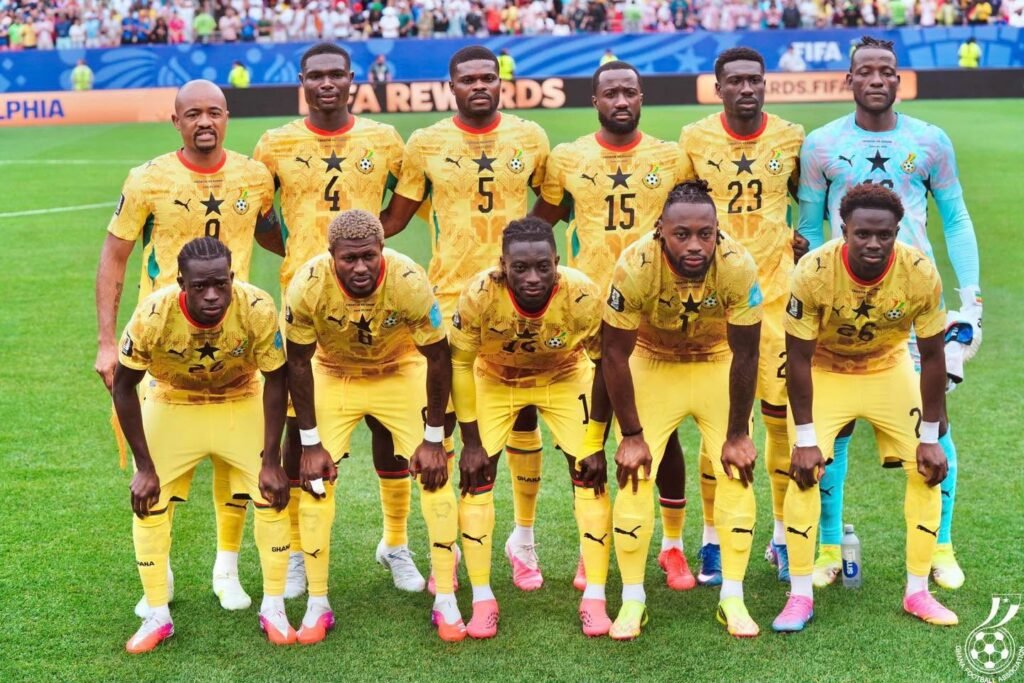
Carlos Queiroz’s Ghana squad entered a demanding international window with three assignments on the calendar: 2027 Africa Cup of Nations qualifiers against Côte d’Ivoire and The Gambia, followed by a friendly against Morocco. The Ghana Football Association announced a 24-man squad made up of established internationals, returning players and first-time senior call-ups.
The selection and the schedule
The squad included Mohammed Kudus as a returnee, while Jan Gyamerah and Ronald Donkor received their first senior call-ups. The GFA announcement grouped the selection into three goalkeepers, eight defenders, five midfielders and eight forwards.
The Ghana Football Association later confirmed that the team opened camp in Accra on 21 September to prepare for the two qualifiers and the Morocco friendly. The official schedule placed Ghana’s first qualifier away to Côte d’Ivoire in Bouaké on 24 September, followed by a home meeting with The Gambia at the Accra Sports Stadium on 29 September. The Morocco friendly was scheduled for Tangier on 4 October.
That sequence gives the squad little preparation time before competitive football begins. It also means the first two matches carry more immediate significance than the friendly: they are the fixtures that begin Ghana’s route through the 2027 AFCON qualifying campaign.
Why the squad has changed
The GFA’s subsequent update is important context. The association said medical uncertainties led to additions to the squad, naming Jonas Adjetey, Alidu Seidu, Ebenezer Annan, Rockson Yeboah, Rahim Ibrahim, Brandon Thomas-Asante, Mohammed Fuseini, Benjamin Tetteh and Felix Afena-Gyan.
The changes show why a squad announcement is a starting point rather than a final guarantee that every selected player will be available for every match. International windows can change quickly when players arrive with injuries, fitness concerns or club commitments. Ghana’s final matchday group can therefore differ from the initial list.
The main football questions
The first question for Queiroz is continuity. Ghana’s squad combines experienced players with new options, but a short camp limits the time available to build relationships and rehearse patterns. The coach must decide how much of the team can remain familiar while still responding to availability and opponent-specific needs.
The second question is midfield and attack balance. The selection includes established attacking names such as Kudus, Ernest Nuamah, Antoine Semenyo and Jordan Ayew, while the inclusion of emerging players creates competition for minutes. Competition is useful only if the roles are clear and the team can move the ball effectively under pressure.
The third question is how Ghana manages the difference between qualification football and a friendly. The qualifiers demand points and game management; the Morocco match offers a chance to assess players and combinations, but it should not be used to blur the competitive priorities of the first two fixtures.
What to watch next
Readers should follow the GFA’s final squad updates, confirmed line-ups, player availability and the results of the opening qualifiers. The most useful follow-up will not simply repeat the 24 names. It should explain which selections became regular starters, which changes were forced by fitness, and whether Ghana’s approach produced control and chances against strong opposition. BornAgain readers can also follow the GFA search process for a new Black Stars coach and the Sports Ministry’s directives to the GFA for the wider national-team context.